
Always consider the specific context of the company when identifying and calculating such assets. Physical assets, like equipment or vehicles, require regular maintenance. Ignoring this can lead to costly breakdowns, reducing operational efficiency. Overestimating the value of inventory, especially outdated or unsellable stock, can misrepresent your financial position. This mistake often leads to poor decision-making regarding purchasing or investments. Regularly review your accounts receivable and send timely payment reminders.
Marketing Against the Grain
The difference between current and non-current assets is pretty simple. Current assets are resources that are expected to be used up in the current accounting period or the next 12 months. Non-current assets, on the other hand, are resources that are expected to have future value or usefulness beyond the current accounting period. Some examples of non-current assets include property, plant, and equipment. These resources are often referred to as liquid assets because they are so easily converted into cash in a short period of time. Contrast that with a piece of equipment that is much more difficult to sell.

How Current Assets Impact Financial Health
The same can be said for current assets, they’re immediate and easily accessible. Noncurrent assets are depreciated to spread their costs over the time they are expected to be used. Noncurrent assets are not depreciated to represent a new or replacement value but simply to allocate the asset’s cost over time. Marketable securities are highly liquid instruments that include stocks, Treasuries, commercial paper, exchange-traded funds (ETFs), and other money market instruments.
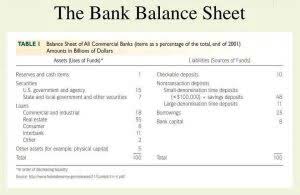
Current Assets vs. Noncurrent Assets Example
- Current asset capital investment decisions are short-term funding decisions essential to a firm’s day-to-day operations.
- For example, Apple, Inc. lists several sub-accounts under Current Assets that combine to make up total current assets, which is the value of all Current Assets sub-accounts.
- These shares would not be considered liquid and, therefore, would not have their value entered into the Current Assets account.
- Accounts receivable represents money owed to the business by customers who purchased goods or services on credit.
- For instance, a service company may not have a significant amount of inventory, while a manufacturing company might.
Mismanagement of current assets, such as overstocking inventory or delaying receivable collections, can lead to inefficiencies that ripple through the organization. Conversely, effective management improves cash flow, enhances productivity, and enables better planning. This stricter ratio excludes inventory to focus on highly liquid assets. A healthy quick ratio Accounting for Churches is often viewed as a sign of strong financial discipline.
- Current assets are short-term assets, which are held for less than a year, whereas fixed assets are typically long-term assets, held for more than a year.
- Investments – Investments that are short-term in nature and expected to be sold in the current period are also included in this category.
- Once you sum up these components, you get the total current assets for a company, which is a key figure for evaluating its short-term financial health.
- Thus, a quick ratio of 1.5 implies that for every $1 of Company B’s current liabilities, it has $1.50 worth of quick assets which can cover its short-term obligations if needed.
- A positive working capital indicates that a company can cover its short-term debts, while a negative working capital suggests potential liquidity issues.
- This consideration is reflected in the Allowance for Doubtful Accounts, a sub-account whose value is subtracted from the Accounts Receivable account.
Divorce and taxes
The assets section of the balance sheet is ordered from most liquid to least liquid. The Current Assets categorization on the balance sheet represents assets that can be consumed, sold, or used within one calendar year. Accounts Receivable – Accounts receivable is essentially a short-term loan to customers and vendors who purchase goods on account.
Cash is the actual physical currency held by a company, while cash equivalents are short-term, highly liquid investments that are easily convertible to known amounts of cash. Examples of cash equivalents include Treasury bills, money market funds, and certificates of deposit. Prepaid expenses are payments made in advance for goods or services to be received in the future.
The dollar value represented by the total current assets figure reflects the company’s cash and liquidity position. It allows management to reallocate and liquidate assets—if necessary—to continue business operations. If current assets are those which can be converted to cash within one year, non-current assets are those which cannot be converted within one year. On a balance sheet, you might find some of the same asset accounts under Current Assets and Non-Current Assets. Total current assets are compared to current liabilities to calculate working capital. assets = liabilities + equity If total current assets exceed current liabilities, the company is likely able to meet its short-term financial obligations.

For example, if Company B has $800,000 in quick assets and current liabilities of $600,000, its quick ratio would be 1.33. For instance, Company A has cash and cash equivalents of $1,000,000 and current liabilities of $600,000. The company’s total current assets increased by 2.09% from $ 128,645 Mn to $ 131,339 Mn in 2017 and 2018, respectively. If a business makes sales by offering longer credit terms to its customers, some of its receivables may not be included in the Current Assets account. Retirement accounts — such what are current assets as 401(k)s, IRAs and pensions — are typically considered marital property if the funds were earned and contributed during the marriage.
This is usually the standard definition for Current Assets because most companies have an operating cycle shorter than a year. These numbers are vastly different because Macy’s is a major retailer with most of its current assets tied up in merchandise inventory. Inventory is not considered to be as liquid an asset as other current assets because, in order to sell inventory in a hurry, it may have to be heavily discounted. This devalues the inventory amount that can be realized from a sale from the book value on the general ledger. Inventory is considered to be a current asset because the company usually expects to sell the product within the year.